The XPan Years
Photographing Scotland through a panoramic frame
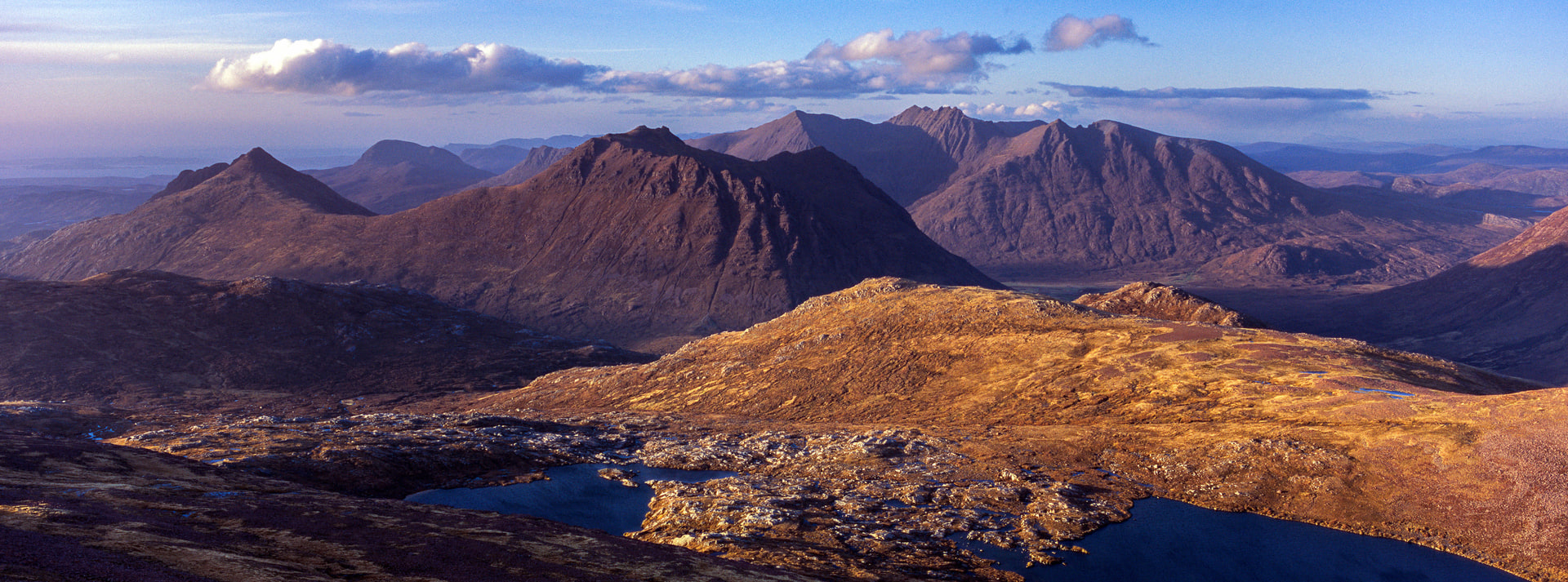
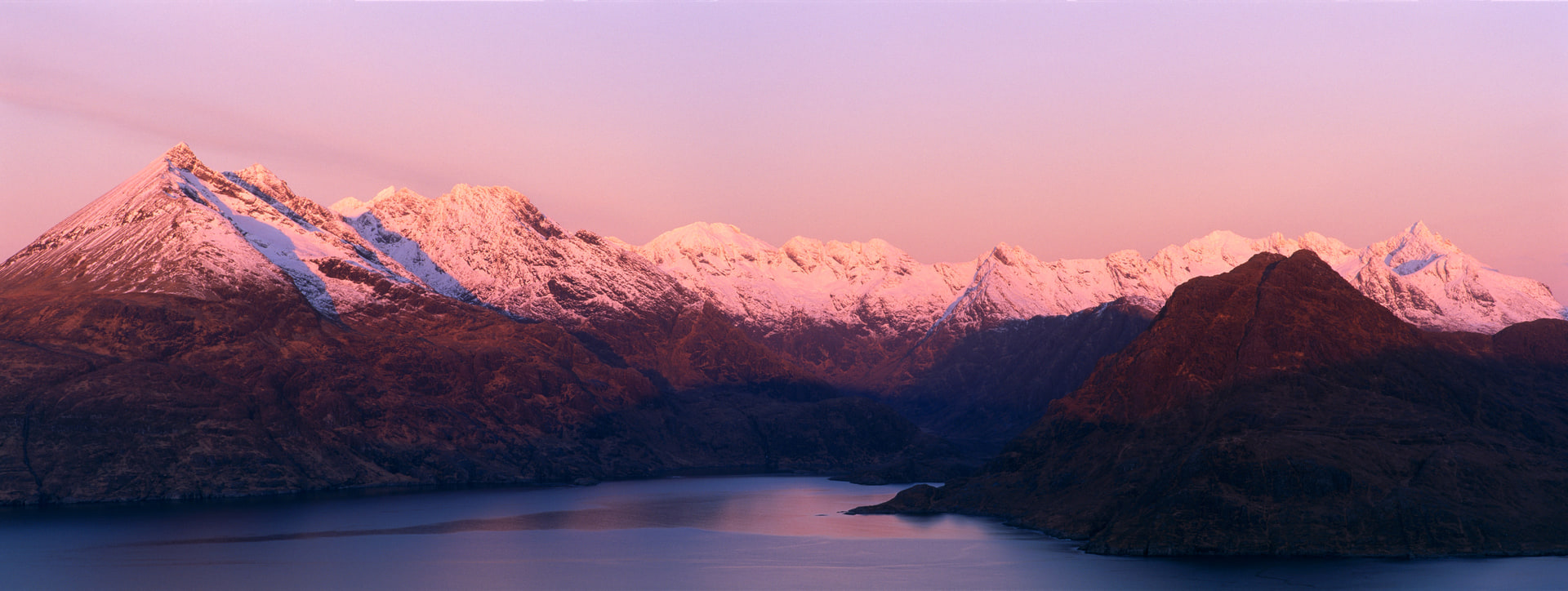
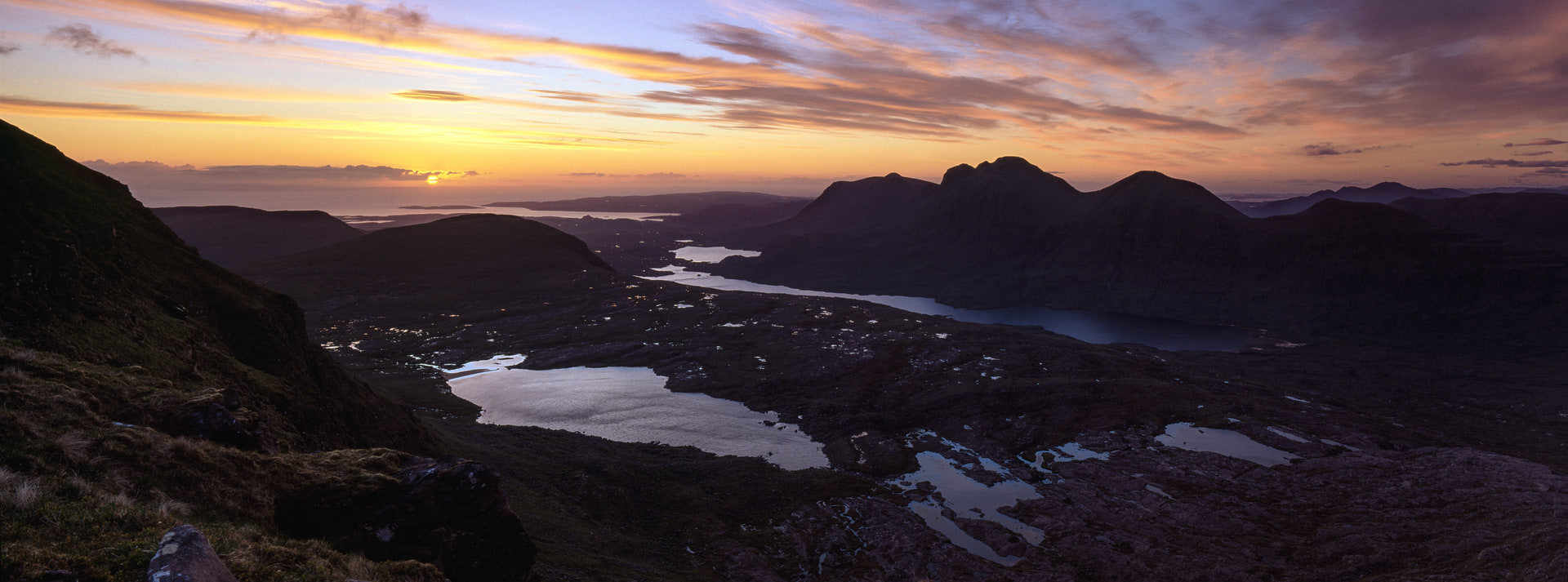
The Black Cuillin · Isle of Skye · Hasselblad XPan 90mm · January 2008
Finding a different way to see
My journey into panoramic photography began around 2005, when I was experimenting with stitching digital photographs together to produce wider landscape images. Although the results could be rewarding, the process was frequently frustrating. Digital stitching was still relatively primitive, and making a convincing panorama could involve a considerable amount of work long after the photographs had been taken.
I wanted something more immediate. A way of making a panoramic photograph in a single exposure, with the composition decided in the landscape rather than assembled afterwards on a computer.
I had also become fascinated by the photography of Colin Prior. His books were a tremendous source of inspiration, particularly the sense of scale, atmosphere and space that the panoramic format brought to the Scottish landscape. I wanted to explore that way of seeing for myself.
That search eventually led me to the Hasselblad XPan.
At the time, the XPan was comparatively affordable, particularly with its 45mm lens. It also used ordinary 35mm film, which made it considerably less expensive to operate than the larger panoramic cameras I had considered, including the Fuji GX617 and Linhof Technorama.
Those cameras produced much larger negatives, but for someone about to teach himself film photography, they represented an expensive way to make mistakes.
And I was going to make plenty of those.
Learning the language of film
I came to the XPan with almost no experience of shooting film. I understood the principles of exposure, but translating that knowledge into consistently successful transparencies was another matter entirely.
I had chosen Fujichrome Velvia, partly because I loved its rich, saturated colours. In the right conditions, the results could be extraordinary, but it was an unforgiving film. Its limited exposure latitude meant that preserving detail in bright highlights and deep shadows required careful judgement, with remarkably little room for error.
Unlike digital photography, there was no screen on the back of the camera offering immediate reassurance. Once the shutter had closed, I had no way of knowing whether I’d judged the exposure correctly until the film returned from processing.
I could make around twenty-one panoramic exposures on a roll, which made learning through trial and error rather more affordable than it would have been with a larger film format. Nevertheless, every frame had a cost, and every unsuccessful transparency offered another lesson.
Gradually, I began to understand how Velvia responded to different qualities of light. I learned to anticipate how a scene would translate onto film rather than simply relying on how it appeared to my eyes.
That was perhaps the most important lesson of those early years: learning to see not just the landscape in front of me, but the photograph the film was capable of recording.
Learning to read the light
As my experience grew, protecting the highlights became almost second nature. A bright sky above a darker landscape could easily exceed Velvia’s limited exposure range, and once those highlights were lost, there was little hope of recovering them.
To manage that contrast, I carried three very hard graduated neutral density filters, in strengths of one, one and a half, and two stops. The unusually wide proportions of the XPan frame made conventional, softer graduated filters less effective for the way I worked. I needed a much more abrupt transition between the darkened and undarkened areas.
In practice, the one-and-a-half-stop filter was sufficient for perhaps ninety per cent of the situations I encountered.
But choosing the strength was only half the problem.
With no screen to show me the result, positioning the filter was largely a matter of judgement. Place it too high and the sky might remain overexposed. Too low and I risked visibly darkening parts of the landscape that should have remained untouched.
Through trial, error and a fair number of disappointing transparencies, I developed a feel for where that transition needed to fall. Eventually, decisions that once demanded considerable thought became almost instinctive.
I could look at a scene, anticipate how Velvia would respond, and make the necessary adjustments before pressing the shutter.
The technical process gradually became second nature, leaving me free to concentrate on the landscape itself.
The moment of truth
One of the things I came to appreciate about transparency film was the remarkable clarity of judgement it brought to the process.
There was something quite special about laying a freshly processed roll of Velvia on a lightbox. The successful photographs had a way of immediately announcing themselves. Your eye was drawn to them almost instinctively, while the less successful frames seemed to disappear into the background.
It was a wonderfully simple way of separating the wheat from the chaff.
In a sense, much of the decision-making had already been taken care of. The film had been processed, the colours and contrast were established, and the result was there in front of you. There was no temptation to spend hours experimenting with different interpretations on a computer.
Of course, that could be a rather brutal experience when you’d made a mistake. But when everything came together, there was something immensely satisfying about seeing a successful transparency illuminated on the lightbox.
The photograph that changed everything
On only my second outing with the XPan, I made a photograph that would shape much of what followed.
I’d spent time exploring and planning a viewpoint on Beinn a’ Chrulaiste, looking across Glen Coe towards Buachaille Etive Mòr and the mountains beyond. I knew the composition I wanted. What I couldn’t possibly know was whether the light would cooperate.
That morning, it did.
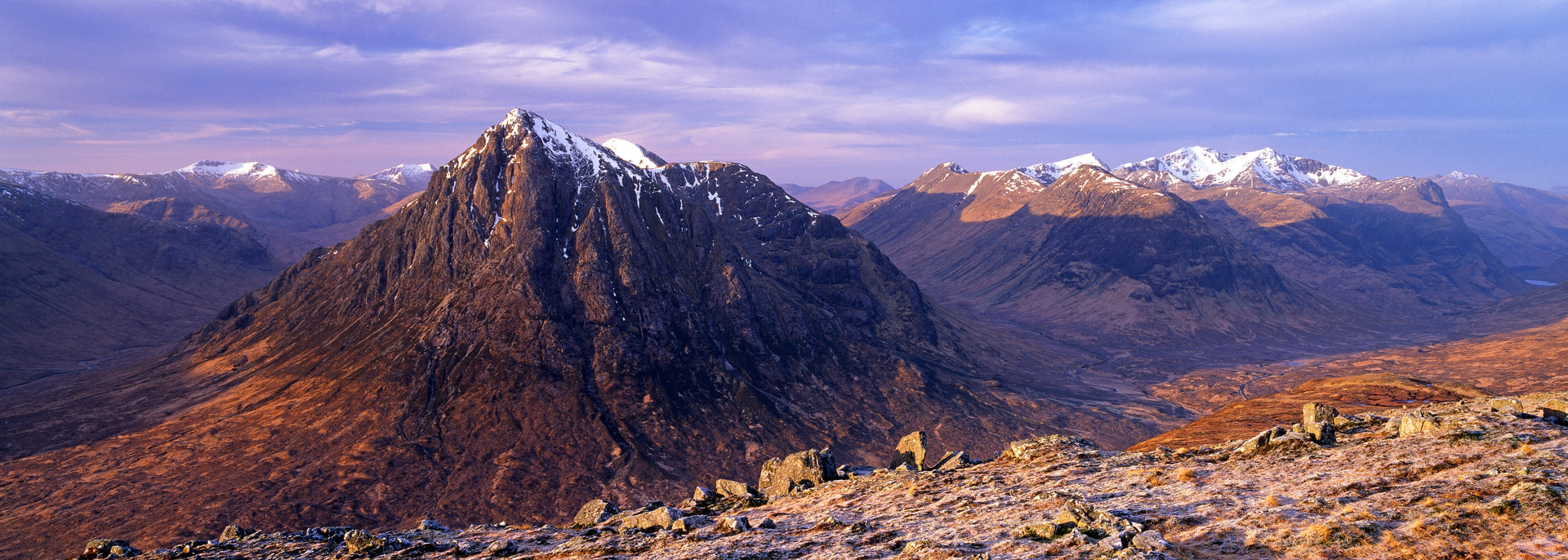
I returned with a photograph that was everything I’d hoped the XPan might allow me to achieve. For the first time, the picture I’d imagined and the photograph I’d actually made came remarkably close to one another.
There was undoubtedly a great deal of luck involved. I was still inexperienced with film, still learning how to expose Velvia correctly, and the conditions had come together at precisely the right moment.
But that photograph proved something important to me. The approach could work. The planning, the early starts, the journey into the mountains and the patience required to wait for the light could produce the kind of images I’d admired for years.
Looking back, it was probably the worst thing that could have happened.
It was like winning a fortune on your first visit to a casino. Once you’ve experienced that extraordinary feeling, you spend an awful lot of time trying to find it again.
And that’s more or less what I’ve been doing ever since.
More than the photograph
Perhaps the greatest influence the XPan had on my photography was something I hadn’t anticipated when I bought it.
It gave me a reason to be there.
The photographs required me to venture into the landscape, often at unsociable hours and in uncertain conditions, with no guarantee that I would return with anything worthwhile. Sometimes everything came together. More often, it didn’t.
But even an unsuccessful outing could be memorable.
There were mornings spent watching the first light reach a distant mountain, evenings when the landscape seemed to change colour by the minute, and moments of extraordinary weather that lasted only briefly before disappearing.
Without photography, I might never have witnessed many of those things.
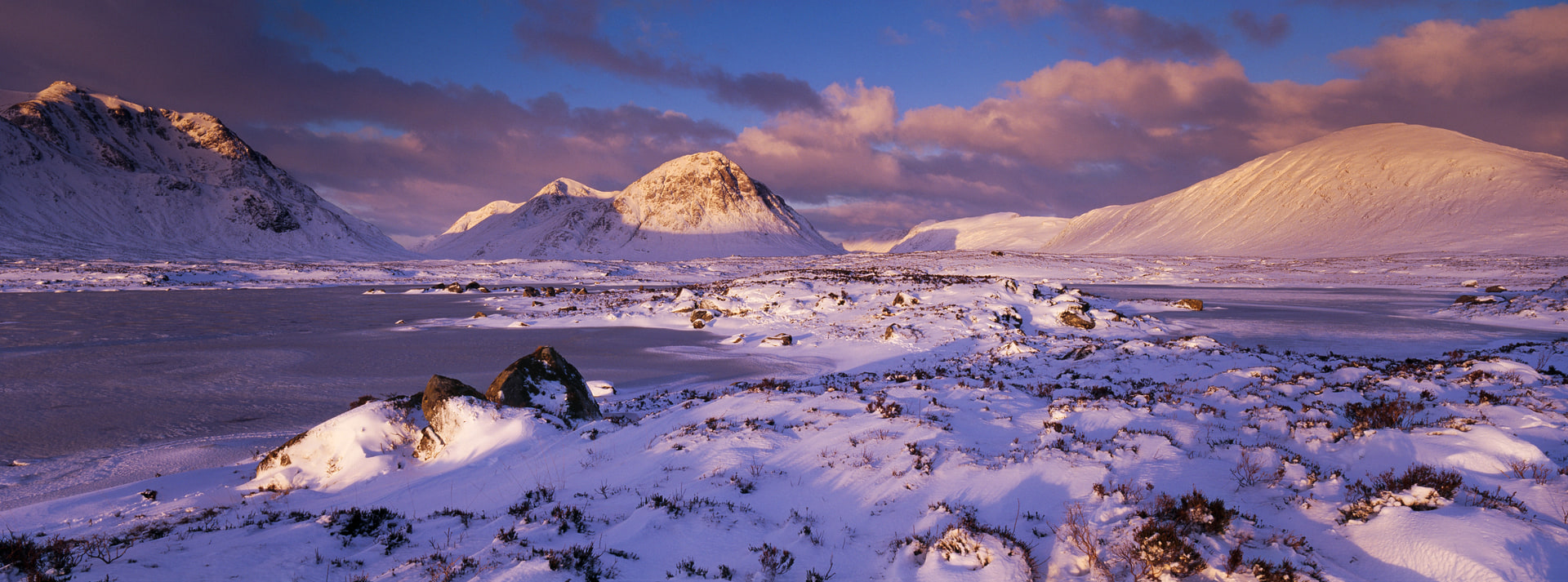
And that has become fundamental to how I think about my work. The photograph is important, of course, but so is the experience of making it. The journey, the anticipation, the uncertainty and the privilege of being present when something remarkable happens are inseparable from the finished image.
In many ways, my photographs are records of those experiences as much as they are representations of the landscape.
The XPan was an ideal companion throughout those years. It was light, compact and straightforward to operate, allowing me to travel into the mountains without carrying an unnecessarily complicated photographic system. It was also remarkably dependable. Whatever conditions I encountered, the camera simply continued to work.
As my confidence grew, I spent less time thinking about the equipment and more time paying attention to what was happening around me.
Ultimately, that was exactly what I had been looking for.
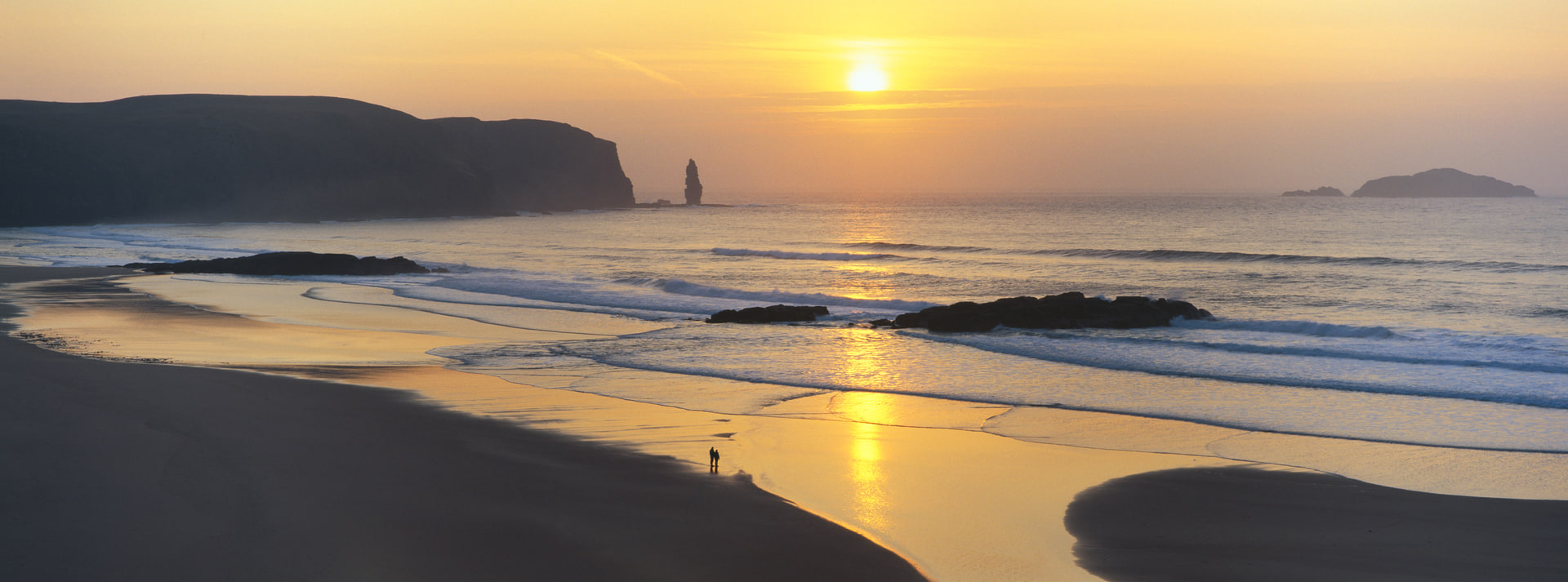
Moving beyond film
For all the years I spent working with the XPan, I never regarded film as something inherently superior to digital photography. It was simply the best way I had found to make the photographs I wanted at the time.
I loved the camera, and I particularly loved the look of Fujichrome Velvia. There was something about the colour and contrast of a beautifully exposed transparency, already established through the film and its processing, that I found immensely appealing.
That particular quality is perhaps the one thing I genuinely missed when I eventually moved away from film.
But 35mm had its limitations.
The XPan had been a practical and relatively affordable introduction to panoramic film photography, but the costs accumulated. Film had to be purchased, exposed, processed and scanned. Every exposure carried an expense, whether it produced a successful photograph or not.
And beyond the financial considerations, there was image quality.
Even the finest drum scan of a well-exposed 35mm transparency had its limitations. Film grain, resolving detail and the practical constraints of extracting information from such a small frame were all factors I had learned to accept.
When I eventually experienced what a 50-megapixel medium-format digital sensor could produce, the difference was extraordinary.
The clarity, fine detail, tonal information and flexibility of the files were on another level. For the way I photographed landscapes, the improvement wasn’t marginal. It was night and day.
My move into medium-format digital began with the original Hasselblad X1D, followed by the X1D II and eventually the X2D. As digital technology advanced, the advantages only became more compelling.
And once I’d seen the difference for myself, there was no going back.
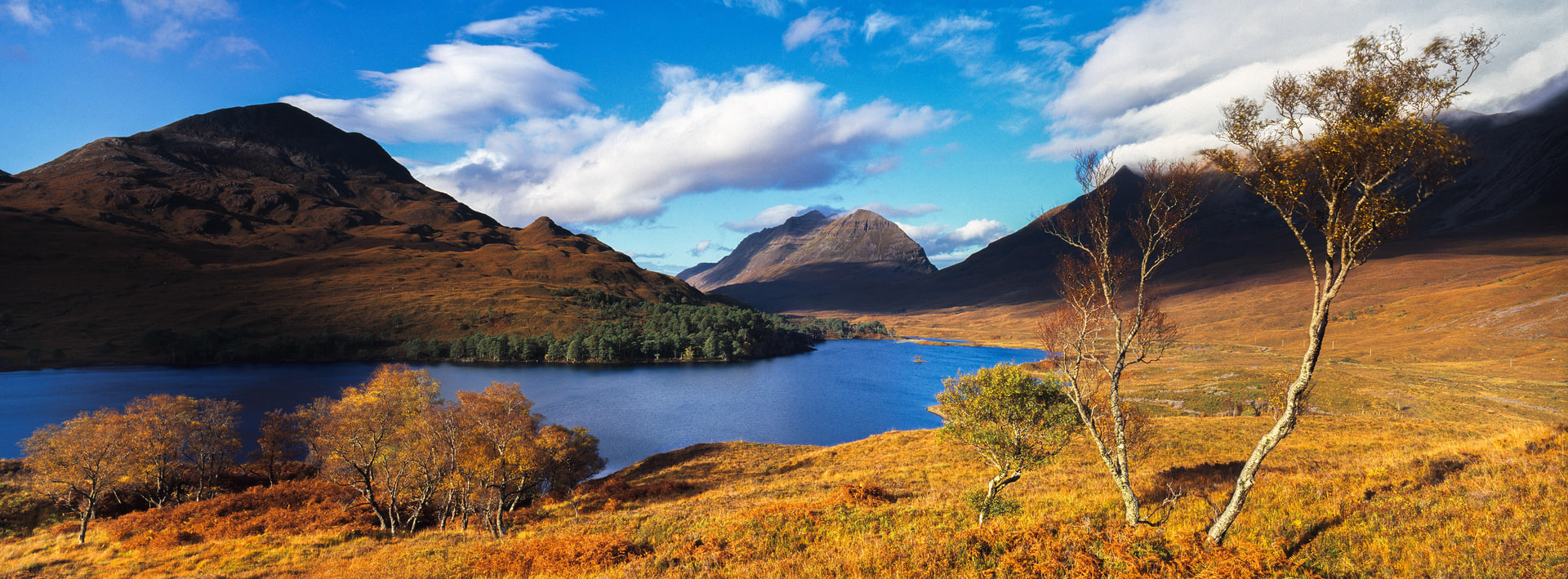
I didn’t feel that leaving film behind diminished the photographs I’d made with it. Those images belonged to a particular period of my photographic life, and I remain enormously fond of them.
The XPan had given me the means to discover places, develop my approach and make photographs that are still important to me today.
But the equipment had never been the point.
The panoramic format remained. So did my fascination with Scotland’s mountains, its light and its weather. The patience, preparation and experiences that had shaped my photography were unchanged.
Only the means of recording them had moved on.